When Politicians Abuse The Bible

Recently, Tim Kaine began talking about his support for what he calls marriage equality. In his speech he mentioned that he believes the Catholic Church will change their position on gay marriage, but the reason why he believes the Catholic Church will change, well, makes you scratch your head. Listen in;

https://m.youtube.com/watch?v=du0MzzleUxg

Tim Kaine appeals to Genesis, yes, Genesis. Specifically Genesis chapter 1 when God proclaims everything to be good, very good in fact. Scratching your head yet? In election season from time to time we here candidates quote or refer to the Bible, sometimes they are spot on and others, like Tim Kaine, make you contort your face like you have been sucking on a lemon.

Oh Tim Kaine, How Art Thou Wrong, Let Me Count The Ways

This blog post can turn into a long form piece pointing to the many ways Tim Kaine is wrong, but let’s just point to a couple. First, when God proclaimed all was good, everything was good, but flip over two chapters and we see sin come into every aspect of creation and distort it. Every aspect of creation is under a curse, the ground, the animals, and yes even humanity. The sin curse we are under causes humanity to rebel against God’s original creation purpose, to walk in harmony with him in the garden. If we continue reading the Genesis account we see immediately the result of sin, rebellion begins by Cain killing Abel, and then we see a spiraling out of control of sin in the rest of Genesis 4. Fast forward to Genesis 19 and the Lord comes down and destroys Sodam and Gomorrah, one of the reasons is for the sin of homosexuality. Which is a clear sign the Lord was thinking this is not good. In the New Testament, Paul writing to Christians in Corinth says,

Or do you not know that the unrighteous will not inherit the kingdom of God? Do not be deceived: neither the sexually immoral, nor idolaters, nor adulterers, nor men who practice homosexuality, nor thieves, nor the greedy, nor drunkards, nor revilers, nor swindlers will inherit the kingdom of God. And such were some of you. But you were washed, you were sanctified, you were justified in the name of the Lord Jesus Christ and by the Spirit of our God. – 1 Corinthians 6:9-11

Did you see that he lists homosexuality as one of the sins, but he also points out the Lord has saved some for his own purpose, when he points out “and such were some of you.” God is calling the gay person into a loving communion with his Creator and a return to God’s original purpose.

Secondly, when the Lord proclaims all is good, what specifically is he calling good in his creation of man. Let us look to Genesis and see,

So God created man in his own image, in the image of God he created him; male and female he created them. – Genesis 1:27

How did God create humanity? When God created humanity, he created them in his image, which is why we as Christians should be ambassadors of truth in love to the LGBTQ community, even though we disagree, because they are image bearers of God. We also see he created them male and female and this is what God calls good. This proclamation of good over humanity is what Tim Kaine leaves out in his speech. God is proclaiming the beauty of marriage between a man and woman as good, he is proclaiming the goodness of male and female roles, not marriage equality.

Tim Kaine has a right to his opinion, but please do not drag the Bible through the mud by trying to make it say what it clearly doesn’t say.

Until Next Time

Soli Deo Gloria

A Civics Lesson From Al Mohler

God raises up people like the men of Issachar who understand the times and know what to do (1 Chron 12:32), Al Mohler is one of them. On Tuesday evening in Indiana Donald Trump became the Republican nominee and Bernie Sanders won the state for the Democrats. With Tuesday evening on his mind, Al Mohler provides us with an excellent civics lesson.

The challenge of government has been a human preoccupation ever since sinful humanity was cast out of the Garden of Eden. We have a responsibility to think through the question of government because as human beings we cannot escape that responsibility. An historical review helps us to understand that for most of human history, the basic question that human beings have had is how they will respond to a government that was forced upon them. This places us in a very rare historical moment. Those of us who are living in the West, especially in the United States, understand that we bear the responsibility of forming our own government and of electing our own leaders. In the span of history, this is a very rare privilege, and it is one that stands upon certain assumptions and foundations that are absolutely necessary. Most people in history only faced the question of how they would respond to the government that they faced, not the government that they chose, much less the leaders that they elected. But when we do have the privilege of being citizens in a representative democracy, the responsibility of undergirding and preserving that democracy then falls to us. The idea of a Republic of citizens is a very rare idea indeed. And it is based upon a series of ideas that emerged out of the Christian worldview, an understanding of the right of the individual, of human dignity, and human rights that were, as the Founders of the American Republic recognized, granted to all humanity as the gift of the Creator.

But now we come to understand that the big questions that have perplexed human beings for a very long time have now come with a certain urgency to Americans in this particular moment. We come to understand that the idea of a Republic of citizens, rare and recent as it is in terms of the span of human history, is something that has a certain pedigree the takes us through the city states of ancient Greece, the Republic of ancient Rome, that takes us to the Magna Carta in terms of Britain, and finally to the Constitution of the United States. We understand that there is a philosophical pedigree and there have been various experiments in government that have led to the great experiment in the United States of a limited government, of a representative democracy, and of a Republican form of government. The American Revolution, we should understand, followed both liberal and conservative impulses. The liberal impulses were to recognize the gift of liberty, therefore, the word liberal. And it was a radical idea in a world that was framed by history of tyranny and established monarchy. But the American Revolution was also, as historians note, a conservative revolution; it claimed nothing more and nothing less than a reset of the natural order that God had intended in terms of the recognition of human rights and human dignity.

The Framers of the American experiment understood that this kind of government would require certain virtues in its citizens, a certain temperament. These would include a restraint of passions and an honoring of certain moral virtues, moral virtues without which a form of democratic government would not be possible. Edmund Burke, one of the most important political theorists in Western history, pointed out that government was necessary because human beings are, in his words, “marshaled by a divine tactic.”

That is to say, we yearn for a certain form of liberty, but we also yearn for a certain structure of order. It is the responsibility of government to find the right balance between these. That balance was framed by the American Constitutional Founders in terms of a Constitutional Republic, a Republic that would be bound by the Constitution in order to make sure that as a limited government with limited powers it did not become a form of tyranny against the very citizens that had placed it into power. The separation of powers was essential to the American constitutional order, an understanding based upon the doctrine of sin and an affirmation of what Lord Acton described in terms of these words:

“Power corrupts, an absolute power corrupts absolutely.”

The avoidance of absolute power invested in any single individual or even a single branch of government is what led the Framers of the American constitutional order to establish the Executive branch, the Legislative branch and the Judicial branch, in order to make certain that there would be checks on the power of one against the other, or even of two against a third. The Founders of the American experiment also understood, as we have said, that certain moral virtues would be necessary of a citizen who would vote in such a Republic. There would be a certain temperament that would include the fact that passions would have to be restrained, that a demagogue should be avoided, and the honoring of certain moral virtues, without which a democracy cannot flourish. The idea of limited government requires that citizens fulfill many of the responsibilities themselves in order to avoid government coming in with a tyrannical hand to do what only the citizens should be honored to do. Furthermore, the kind of limited government that is envisioned in our constitutional order requires an honoring of basic institutions as well as basic rights. Those institutions include family, church and community.

The Framers of the American Republic understood that it would be impossible to have a representative democracy, a limited government, much less an experiment in self-government, if the people did not first govern themselves and if they did not, when they went into the voting place, vote for those elected leaders who would also demonstrates the same virtues, the same restraint of passions, the same basic disposition, the same basic respect for institutions including marriage, family, the church, and the local community. It is the primacy of those basic institutions, what are rightly defined as pre-political institutions—that is, each of those existed before the formation of any government, the government coming into existence merely is to affirm and to respect them—the existence and honoring of those pre-political institutions also requires the honoring of a set of moral virtues, virtues of temperance, virtues of responsibility, a basic moral structure in terms of right and wrong, righteousness, and justice that would be required if a people could indeed govern themselves, rather than to be governed by some kind of autocratic or tyrannical power. Thus the Constitution called for not only a limited government, but also of a government that would operate by explicitly enumerated powers; that’s the language of the U.S. Constitution. In other words, that is to say that the government only had powers that were clearly and constitutionally assigned to it. Assigned before government were the responsibilities of a married couple, the responsibilities of a family, the responsibilities of the church and other civic organizations in society, and the responsibility of local communities, local communities that were understood, like the family, of necessity to govern themselves long before there would be a responsibility of a national government or even for that matter of estate government.

But the idea of a limited government requires an honoring of these institutions, and it furthermore requires the health of these institutions. When a civil society is weak, government becomes incredibly strong. When the family breaks down, government grows stronger. When the essential institutions of society are no longer respected, government demands that respect for itself. That is a recipe for tyranny.

All that I just said was basically understood by most Americans and affirmed, for instance, even in the curriculum of the public schools until the early decades of the 20th century. When what was called a progressivist agenda came into place, that redefined the federal government in terms of an activist and expanding role. At the head of that lineage was President Woodrow Wilson; but by the time you come to the middle of the 20th century, the two political parties, though still standing in fairly common terrain, are beginning to represent two very different visions of government. And when it comes to the Democratic Party, that party became more and more committed to an increasingly powerful government, a government that would expand in terms of its powers far beyond those enumerated in the Constitution.

In the name of a progressivist vision and in the service of that vision, the Democratic Party and those who style themselves liberals and progressives at the midpoint of the 20th century began to call for a far more activist government; and at the same time, we need to note, they called for a basic redefinition of the American social compact and of the morality that shaped our common culture. The institutions, including, we should note, most recently the institution of marriage, was redefined and the morality itself, especially as relates to sexual morality and the moral relations of people in the family, all those were redefined as well. By the time you get to the 1960s, the two political parties were growing further and further apart in the cultural cleavage of that crucial decade. The sexual revolution in various ideological developments, including feminism, landed on the American scene, and eventually the two parties grew further and further apart. By the time you got to the 1980s, it was clear that the two parties represented two very different arguments, and over time these were rather consistent and coherent arguments. There were two political parties; there were two basic visions of America. By the time you got to the 21st century it was increasingly clear that the predictability of these two parties was part of what appeared to be the enduring presence of the 20th century and the 21st.

But now all that has changed. We look to yesterday and the primary in Indiana and both political parties and face the cold stark reality that neither of these parties is behaving in a way that was predictable just a few months ago, and both of these parties are now representing a basic crisis in American democracy, each in its own way.

Continue reading “A Civics Lesson From Al Mohler”

Feeling More Like A Sojourner

I was out to lunch with some friends the other day, inevitably the Presidential race became a topic. All of us, astounded by the rise of Trump in this years election cycle. We began to discuss what implications this will have on our culture and the culture of future generations. While this conversation was going on, the longing for home grew in my heart, not the house I live in a few minutes away, but my home with my Savior Jesus Christ.

Strangers In This World

For most of my Christian life, it has seemed, to be a conservative Christian was synonymous with Republican. As Christians we seemed to find our home in the Republican Party. We were the “Moral Majority” we were the “Religious Right”, we were cozy in our world. There seemed to be a shift that has jolted us into a very uncomfortable position, Continue reading “Feeling More Like A Sojourner”

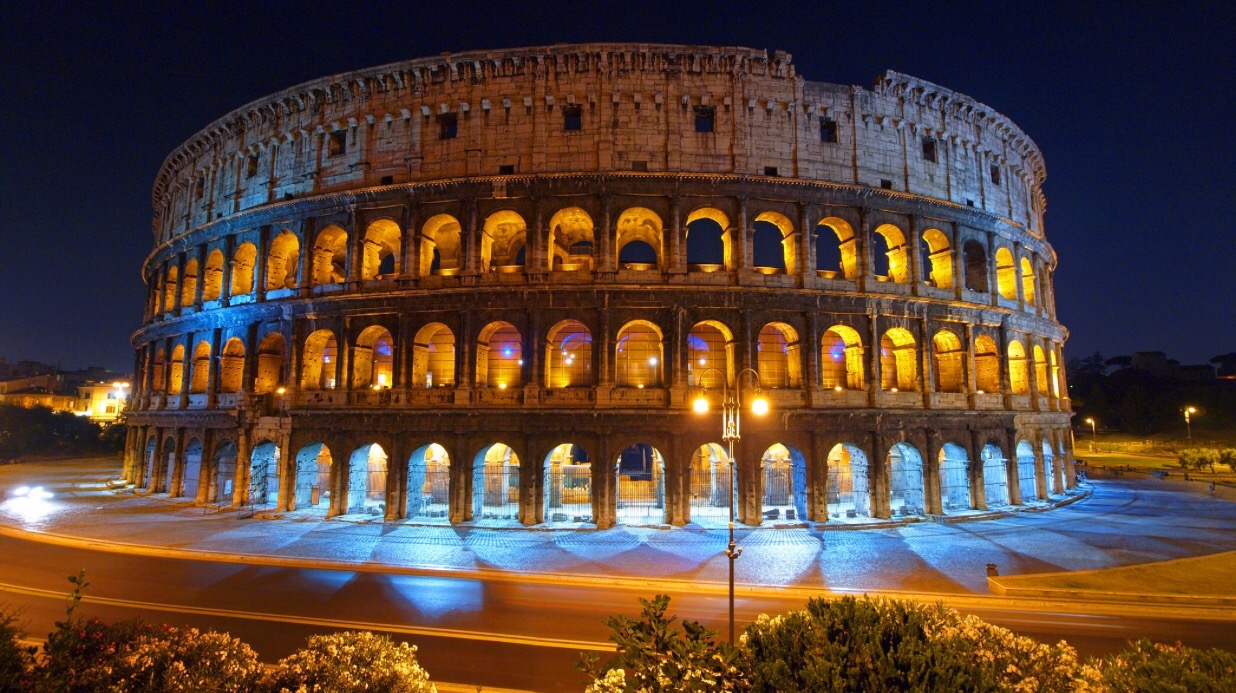
The Reinvention of the Roman Colosseum 

  
 Have you ever watched the Gladiator with Russell Crowe playing the part of Maximus? The Roman citizens and leadership do not realize who he is, one of their own left for dead by the new Emperor, he survived and was enlisted as a gladiator. He was finally brought to Rome to take part in the Gladiator fights and when he finally reveals himself the place erupts because of his success in the fights, “Maximus, Maximus, Maximus”. The Collosseum filled with the citizens of Rome cheering on the brutal entertainment the leaders of Rome are providing for them. 

The colosseum was built for several reasons, to demonstrate the power and glory of Rome, an attempt to unify Rome and prevent a civil war. According to Roman life it was also “intended for entertaining and, possibly more importantly, distracting Rome’s population from more serious issues of the time such as oligarchy, nepotism and corruption in the senate.” The Collosseum was built to distract the citizens of the severe issues prancing around in the background which led to its distruction. As I survey the current landscape of the American political process, it seems to be we are reinventing the Roman Collosseum and as citizens we are eating up the entertainment.

The Colosseum As A Venue For Entertainment 

In Rome the Gladiator fights were brutal, they fought to the death. Let’s face it, the fights were rarely, if ever, fair. It was more like a fixed WWE match, with a fixed winner. The goal was entertained citizens, so if the citizens were entertained it didn’t matter if it was fair or not. 

As the presidential debates have progressed through America they are done in a 21st century Colosseum, television and internet mediums. They are viewed by us, the masses, like a sporting event, there is a pre-game and post-game given to us by our unbiased (wink wink) media outlets. Providing for us thoughts and opinions of what we will see or what we have just witnessed.

As I have looked upon these debates, rarely, if ever, have we ever come away with any substantance, it has resembled more of a sophisticated gladiatorial fight on whose ego is bigger to be the president. We rarely delve into the policies of each candidate and how they plan to “make America great again”. Instead we here about the size of a man’s hands and what that means, which seems to be something out of SNL than a presidential election. Or we read about a presidential candidate who says “excuse me I am talking” and why that makes him sexist. After these debates we are encouraged to participate in polls and cheer on who we think won. As the results are revealed, it seems to me, we cheer on who we thought was more entertaining, not who was the most presidential.  In the distance I can here Maximus proclaiming “Are you not entertained?”

 The Colosseum As A Venue For Distraction

The gladiatorial fights were also intended to distract Rome from the serious issues of their day. They wanted their citizens to be mesmerized by the games that they could not see the serious issues facing Rome. This election cycle, we seemed to be mesmerized by the process, debates, political banter, and the media that the serious issues facing us as a country have become a side note.

We are certainly distracted citizens. In Rome it was the political leaders who desired distracted citizens, in America, I am not prepared to say our leadership, as a whole desire a distracted electorate, but it appears some may. We must also place some blame on the 24 hour news outlets. I mean they need to find some way to fill 24 hours, what better than a presidential candidate talking about his hands and what that means or another being sexist, compared to their tax plans or other policies. What topic is going to get eye balls, ratings. Which topic is going to fill the colosseum? 

The ultimate blame for a distracted electorate falls on us as citizens. In America the office of citizen is crucial, we select our leaders and the policies they implement. As citizens we elect those we want to represent us, but if we are distracted, led by the puppet strings we are presented with, we have ourselves to blame for why America is in the condition we find ourselves. We need to, as Americans, take up the mantle of citizenship with seriousness and spend some time to discover the worldview and governing policies of those we elect. It is time we stop forfeiting our rights as citizens by not voting, voting blindly, or voting distractedly. 

Until Next Time 

Soli Deo Gloria

Are We Christians Being Alarmist? I Think Not

Last week I wrote about the relationship between Christian morality and public law from Dr. Mohler’s book Culture Shift.

One of the theses in the article states,

Liberal democracy must acknowledge and respect the rights of all citizens, including religious citizens

We have a great and recent example of this point. Mike Huckabee recently left his show on Fox News to pursue a bid for the Presidency. Some have alluded to disqualifying him because he is an unapologetic believer and has served as a pastor. If these same views were applied at the nations founding, America may have never been born. Being a Christian shouldn’t disqualify anyone from political office or political debate. The religious person shouldn’t be required to keep his views about politics and public policy within the church walls.

As I was skimming through twitter a few days ago I came across this article in the Los AngelesTimes which states,

When the California Supreme Court voted last week to prohibit state judges from belonging to nonprofit youth organizations that practice discrimination, Julia Kelety was not surprised.

The issue, which had been roiling through the legal community for the last year, had triggered vigorous debate, giving Kelety, a Superior Court judge in San Diego County, time to prepare.

Committee chair for Boy Scout Troop 24, she has already begun to consider a successor before she begins dialing back her commitment to the 30 boys in her troop.

Although the court’s unanimous decision did not explicitly mention the Boy Scouts of America, there was little doubt that it was the intended target. The organization, which lifted its ban on openly gay boys younger than 18, still prohibits gay and lesbian adults from serving as staff or voluntary leaders.

The question to ask is how long before state judges are going to be prohibited from being a member of a religious organization or a church. Denny Burk writes

In other words, the Court knows that it has a standard that churches and other religious organizations violate. That is why they grant them an exception. But on what basis would they continue such an exception? If they really view churches as discriminatory without rational basis, there would be no reason for the exception to stand. That would effectively preclude Christians and other people of faith from serving as state judges in California.

We are witnessing a shift in our society—a shift which inevitably leads to Christians being treated as social pariahs at every level of our national life. And we can see what is unfolding before our very eyes.Louie Giglio’s Christian faith got him removed from the President’s inauguration. Brendan Eich’s Christian faith got him dismissed as CEO of Mozilla. Kelvin Cochran’s Christian faith got him fired from his position as Fire Chief of Atlanta. Who will be next? Christian state judges in California?

So are Christians being alarmist? I think not. Some accuse Christians of sounding an unnecessary and pseudo alarm. But in reality we see Christians are being pushed to the margins of life and if the secularist has their way, completely off the page.

Until next time
Soli Deo Gloria

Understanding the Relationship of Christian Morality to Public Law

As the years pass by our world is becoming increasingly secular. People profess loud and proud “you can’t legislate morality.” The secularist are attempting to silence the Christian and more importantly wanting to silence a Biblical worldview. What is the Christian to do? In Culture Shift, Dr. Mohler presents five theses for understanding the relationship of Christian morality to public law.

1.  A liberal democracy must allow all participants a voice 

America is a very diverse country and in our American democracy every participant in the public square must be allowed to speak from his deepest conviction without fear of being silenced or eliminated from the conversation. These participatory citizens will come from all walks of life from religious to atheist, but each must be allowed equal access to the conversation. Dr. Mohler says, “This is a principle that lies at the very heart of a deliberative democracy.”

2.  Participating citizens in public debate over law/policy should declare the convictional basis for their argument

Two words are important here, intellectual honesty. Something I believe is lacking in the public square. As Christians entering the public square we must be honest about the source of our convictions, line of reasoning and motivations. At the same time all others should be expected to lay out where their convictions, reasoning and motivations lie.

3.  Liberal democracy limits must be a two way street

There are limits in a liberal democracy, for example, we cannot expect the nation to adhere to The Baptist Faith and Message as national law. The First Amendment of the Constitution prohibits the government from establishing a national religion. Just as there are limits on religious discourse, there should be limits on a secular discourse and the secular should not be able to silence the Christian and vice versa.

4.  Liberal democracy must acknowledge the commingling of religious and secular

As a Christian, I see the world through a Biblical worldview. My moral stand point will come from Biblical convictions and will have an impact on my views on public policy and laws. But just because my convictions come from a Biblical view point doesn’t mean those views will not be beneficial for our society. The arguments I would make on public policy will have both religious and secular arguments, religious and secular motivations and religious and secular outcomes. Liberal democracy must allow and acknowledge this commingling of the religious and secular.

5. Liberal democracy must acknowledge and respect the rights of all citizens, including religious citizens

We have a great and recent example of this point. Mike Huckabee recently left his show on Fox News to pursue a bid for the Presidency. Some have alluded to disqualifying him because he is an unapologetic believer and has served as a pastor. If these same views were applied at the nations founding, America may have never been born. Being a Christian shouldn’t disqualify anyone from political office or political debate. The religious person shouldn’t be required to keep his views about politics and public policy within the church walls.

Just some thoughts on what I have been reading and thinking on, until next time

Solo Deo Gloria

Spectators at the Coliseum of Politics

I remember when I was a child the SOTU was a family affair. Families would gather around the TV and watch as the President addressed the nation. We would talk about it in school and my grand parents would talk about it at home. Now with thousands of options on TV many will choose to watch a silly reality show than the Presidential address. With that being said, as I sat down to watch the SOTU address here are my initial reactions.

Big Government vs. Small Government
There is a philosophical battle going on in the Nation’s Capitol. That battle is the war of big government vs. small government. From my initial review of the SOTU, President Obama believes that the answer to many of America’s problems is more government programs. While those who oppose the President believe that government is getting in the way of businesses and “the people” from solving the nations issues.

My question is this, why are we surprised that President Obama wants to install or further fund more government programs? President Obama was elected on the platform that government programs can help the nation’s problems. The people that elected him to that office believe that he should keep his word. I believe the President believes he is doing what is best for the country. But is he?

That really depends on what side of this philosophical battle you stand on. If you believe that government can solve our nation’s issues, then you were happy with last nights speech. But if you believe too much government cripples growth then you were dissatisfied and left the SOTU feeling there was promises made with no substance.

Republican vs. Democrat
Another clear theme from last nights SOTU address is that the divide between the two parties that dominate the Capitol is large. As a nation we have become spectators of a philosophical war that just appears to be getting worse with time. As we watched this chess match play out to a stale mate many times, one thing was very clear last night, President Obama will use executive order to get things done and push his agenda.

On more than one occasion, President Obama referred to getting things moving through executive orders. Which I will be honest, makes me nervous, Why? For several reasons but here are a couple. When the next President is elected he can come in and erase the executive orders and where does that leave the nation? President Obama erased some of President Bush’s and President Bush did the same to President Clinton. So in three years we can be back where we are today.

Second, if we are as President Lincoln said “a government of the people, by the people and for the people” then those in the government are required to sit down and discuss and be willing to compromise for the good of the nation. Our elected officials are to represent those that elect them. With our nation being so diverse, we should expect a diversity of ideas in the Capitol. Our representatives should take the best of those ideas and implement them for the good of the nation, even if it means that a Republican gets the praise, a Democrat gets the praise or God forbid, an Independent or Tea Party candidate get the praise. One party or one person deciding what direction the nation will go, is not the government President Lincoln had in mind or the Founding Fathers. Of course there are exceptions, as was the case with President Lincoln and the issue of slavery.

So Where Do We Go From Here?

Here is some quick advice

* Pray for the elected officials (yes even the ones you don’t like)

* Study the issues and be informed. Don’t become apathetic.

* Write and call your Representatives and let them know where you stand

* Get out and vote

* Join the campaign of someone you would vote for

* Run for office